
A New Way to Talk About ‘Design Trends’—and 8 to Watch in 2026
8 Design Drifts to Watch in 2026
A Designer-Led Forecast for What’s Emerging
What makes a home feel current without feeling trendy?
In my 20 years as a designer, I’ve learned that lasting design comes from understanding how people live. I start every project by listening. Once I understand my clients’ routines, frustrations, and style preferences, the right materials and colors reveal themselves.
While I don’t worry too much about design trends, I do pay attention to subtle shifts in the industry—I call them “design drifts.” They are not the flashy fads that fill social media feeds, but deeper changes rooted in how people live. They stick around because they solve real problems.
Here are eight design drifts I see emerging for 2026.
1. Micro-Flush Lighting
I’m seeing a shift away from traditional recessed can lights toward refined, low-profile fixtures that create softer, more architectural illumination.
These streamlined fixtures sit closer to the ceiling than standard flush mounts but aren’t recessed into the ceiling cavity. They deliver ambient light that feels intentional and sophisticated without the harsh spotlighting effect of recessed cans.
Micro-flush lighting works well here in the Pacific Northwest, where we want to maximize natural light on gray days while creating warm, inviting spaces in the evening. Micro-flush lighting adds an architectural element without overwhelming your design.
Where I use it: Hallways, bedrooms, closets, and as supplemental lighting in living areas.
2. Vintage: Quality That Tells a Story
Vintage continues to claim its place, and I’m all for it. Whether it’s a family heirloom or a treasure from a local antique store, vintage furniture adds a character that’s hard to replicate in new pieces.
Seattle has incredible antique stores where you can find pieces with genuine craftsmanship. I always look for solid-wood construction and timeless silhouettes.
It’s important to note that when vintage pieces rival the cost of buying new, that investment is often in reupholstering a well-made sofa or chair. Quality reupholstery allows you to customize fabric, comfort, and detailing—resulting in a piece that feels entirely your own while preserving superior craftsmanship. In many cases, this approach delivers far greater value than purchasing a mass-produced alternative.
Why vintage makes sense now: With tariffs increasing the cost of new furnishings, shopping vintage helps you avoid those extra expenses. But the benefits go far beyond economics. You’re upcycling, getting a quality piece built to last, and creating a home that tells your distinct story.
3. Copper to Add Warm Metallic Accents
While gold fixtures continue to dominate, I’m seeing copper tones emerge as sophisticated accents that add warmth without overwhelming a space.
I’m not suggesting full copper plumbing suites. Instead, think small, soulful accents: a copper-framed mirror, lighting fixtures with copper details, or copper accessories in your kitchen. These touches complement gold fixtures beautifully and add depth to your metal finishes.
Copper brings warmth to Pacific Northwest homes. The patina that develops over time adds character and connects your home to nature’s own aging process.
Where I incorporate copper: Light fixtures, cabinet hardware, picture frames, teakettles, serving pieces, and bathroom accessories.
4. Textile Artistry
There’s something deeply satisfying about textiles you can see were made by human hands. Handloomed fabrics, embroidery, and stitched edges bring a tactile richness you don’t get from machine-made items.
This design concept connects to a broader cultural shift. More people are taking up knitting, crocheting, and other crafts that let them enjoy the process of making things by hand. We’re rediscovering the value and meditative quality of craftsmanship.
Textile artistry also supports sustainable design, which is core to my philosophy. When you invest in well-made textiles, you’re buying pieces that will last for years rather than fast-fashion home décor that falls apart.
How this looks in homes I design: Handloomed kitchen towels, embroidered pillows, woven throws with visible texture, napkins with hand-stitched edges, and artisan-made rugs.
5. Incorporating Nature’s Geometry with Biophilic Patterns
Biophilic patterning incorporates nature-inspired textures and patterns into your design. Think marble countertops with veining that mimics tree branches, hexagonal tiles that remind you of a honeycomb, or wood paneling with prominent grain patterns that echo tree rings. You might see it in wallpaper with delicate fern prints or stone flooring with organic striations that resemble water ripples.
I often describe it this way: Imagine lying on the ground looking up through a tree canopy. You see branches spreading out like the vessels in our bodies, creating patterns that feel both structured and organic. That’s the essence of biophilic patterning.
This design drift supports wellness by helping us maintain our connection to nature even indoors. My background as a massage therapist taught me that our environments profoundly affect our well-being. And research shows that nature-inspired patterns reduce stress and promote healing.
In the Pacific Northwest, where we’re surrounded by forests and water, biophilic patterning brings the outside in and feels resonant and authentic.
Where I incorporate it: Tile patterns, wallpaper, fabric prints, wood grain selections, stone veining, and architectural details.
6. Sculptured Furnishings
Sculptured furnishings feature bold silhouettes that command attention without overwhelming your space. Imagine sofas with cloud-like curves instead of straight lines, coffee tables shaped like smooth river stones, or headboards that feature gentle waves rather than sharp angles.
I rarely fill an entire room with sculptured furnishings, but one carefully chosen piece can create a focal point, elevating the whole design.
This design drift works beautifully with other items on this list. Sculptured furniture often incorporates biophilic curves and pairs well with textile artistry and vintage pieces.
How to do it: The key is to select forms that feel sculptural but remain comfortable and functional. Sculptured furnishings should enhance both how you live and how your space looks.
7. Thoughtful Details Through Architectural Elements
Here are three architectural design elements that can add interest and dimension to your home.
Slat Walls
Slat walls turn a flat, boring wall into something with rhythm and dimension. Think vertical wood strips spaced an inch or two apart, running floor to ceiling. Slat walls also absorb sound, making them ideal for media rooms (for clearer audio), hallways (for less echo), and libraries (for quieter spaces).
Molded Wall Panels
Molded wall panels have raised patterns, such as waves, grids, or geometric shapes, that stick out from the wall surface. As sunlight moves across them during the day, the shadows change. What looks understated in bright afternoon light becomes dramatic and dimensional under evening lamps positioned at angles.
Enhanced Molding Details
Enhanced molding details change simple trim into something substantial. Instead of one flat piece of baseboard, you might stack three profiles with different shapes to create depth. Door casings could have decorative header blocks or layered trim pieces. Even cabinet doors can add picture frame molding, with raised borders that create shadow lines and visual weight.
8. Using Saturated Neutrals for Rich, Rounded Tones
Stark white and flat beige dominated design trends for years, but homeowners are craving more warmth and depth. That’s why I’m embracing a shift toward saturated neutrals: rich tones like cocoa, raisin, smoked navy, and olive oil green that feel substantial without being bold.
These colors work beautifully in Pacific Northwest homes. On overcast days, they create warmth and a sense of enclosure. When sunlight breaks through, they reveal complex undertones that shift throughout the day, including purple notes in the raisin or golden warmth in the cocoa.
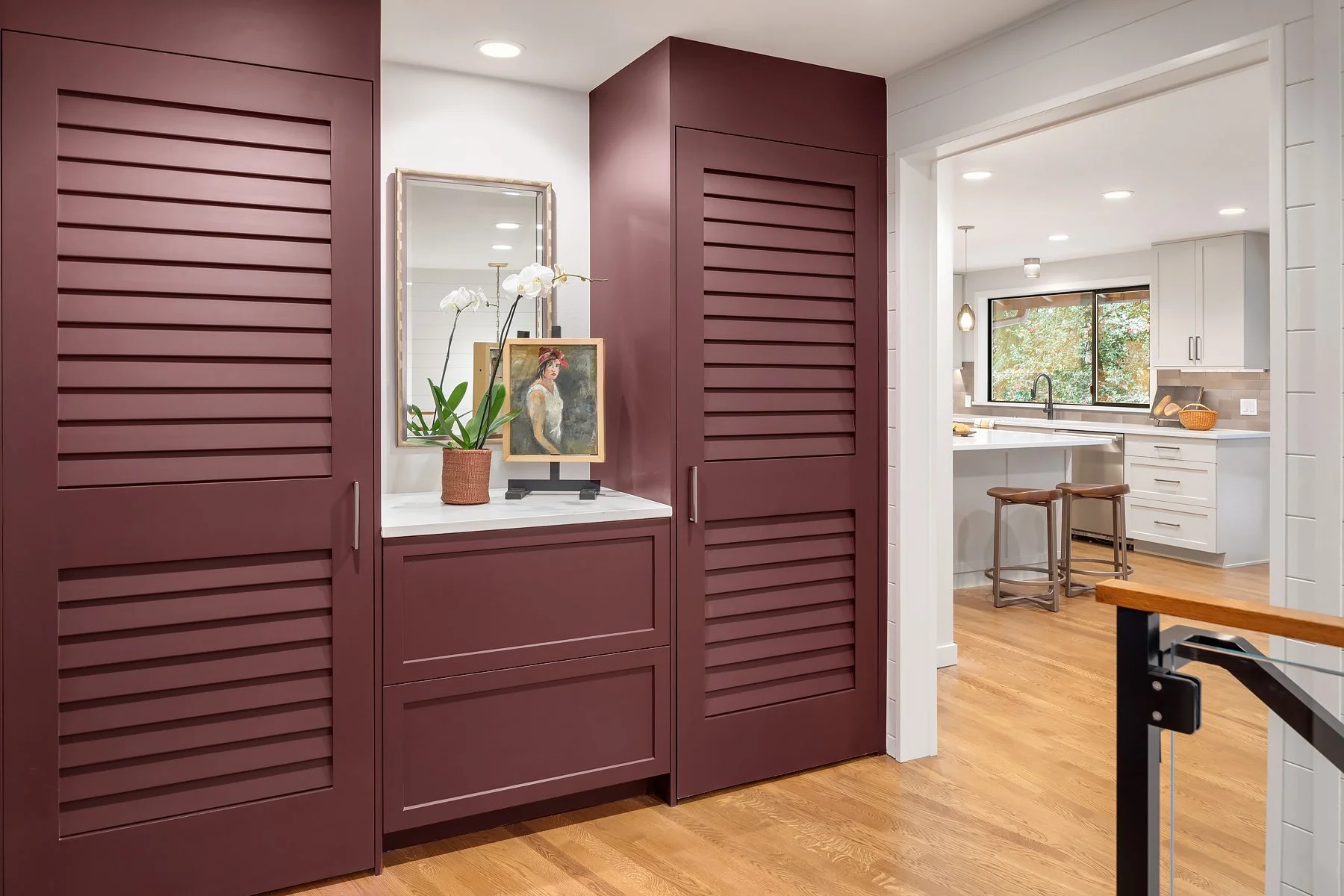
If you’re hesitant, start small. Test the color on one accent wall, or bring it in through a velvet sofa or linen curtains before committing to painting a larger area.
Sustainable, Thoughtful Design for Pacific Northwest Homes
At Well-Designed Home, I bring more than 20 years of experience and an uncommon approach to interior design. My background as a massage therapist taught me to help people stop, listen, and respond to what their bodies need. I bring that same philosophy to your home to create spaces that support your mental and physical well-being, as well as your aesthetic preferences.
Every project reflects my commitment to sustainable practices. I prioritize eco-friendly materials, reclaimed wood, energy-efficient lighting, and low-VOC paints while delivering award-winning design. I work closely with architects, contractors, and builders, whether you’re building new or renovating.
My portfolio spans luxury high-rises, modern lofts, sprawling estates, and cozy family homes throughout Seattle, Bellevue, Mill Creek, Sammamish, Newcastle, and Wenatchee.
Call 206-792-3265 or schedule your free discovery call to get started.
Frequently Asked Questions
How much does an interior designer cost in Seattle?
Interior design investment varies based on project scope. At Well-Designed Home, we start with a complimentary discovery call to understand your needs and provide transparent pricing. Full-service projects typically include design consultation, space planning, material selection, and project management.
What does a holistic interior designer do differently?
Holistic interior design considers how your space affects your mental and physical well-being, not just aesthetics. At Well-Designed Home, we incorporate sustainable materials, biophilic elements, and wellness-focused design principles. My background as a massage therapist informs my approach to creating spaces that support your body’s needs.
What is biophilic design, and why should I incorporate it?
Biophilic design connects your home to nature through patterns, materials, and textures that mimic natural forms. Research shows that it reduces stress and improves well-being, which is especially valuable in the Pacific Northwest, where we spend much of the winter indoors.
How can I update my home without a full renovation?
Strategic updates like vintage furniture, new lighting fixtures, saturated neutral paint colors, and textile changes can transform your space without construction. I help clients identify high-impact changes that fit their budget and timeline.
What are the benefits of using an interior designer vs. DIY?
Interior designers prevent costly mistakes, have access to trade-only resources, and ensure a cohesive design. I coordinate with contractors and architects, source sustainable materials you won’t find at big-box stores, and manage timelines so you can focus on your life.
Where can I find sustainable interior design materials in Seattle?
I source reclaimed wood, recycled materials, natural fibers, low-VOC paints, and energy-efficient lighting through trade relationships built over more than 19 years. These aren’t typically available to consumers, which is one advantage of working with an experienced designer.
What interior design styles work best in Pacific Northwest homes?
Our unique light, gray winters, and bright summers pair beautifully with saturated neutrals, natural materials, and biophilic elements. I help Seattle-area homeowners choose colors and textures that work with our climate and lifestyle.
How do I incorporate vintage furniture into a modern home?
Mix vintage statement pieces with contemporary furnishings for depth and character. I help clients source quality vintage pieces, coordinate reupholstering, and ensure that vintage elements enhance rather than clash with modern design.
What is micro-flush lighting, and should I use it?
Micro-flush lighting creates softer, more architectural illumination than recessed cans. These low-profile fixtures work beautifully in Pacific Northwest homes, where we want ambient lighting that enhances natural light rather than competing with it.
How can I make my home more sustainable through interior design?
Prioritize reclaimed wood, recycled materials, energy-efficient lighting, low-VOC paints, and quality furnishings that last decades instead of just years. I’ve specialized in sustainable design for more than 19 years and help clients make environmentally responsible choices without sacrificing style.